At a Glance: All 21 Options Compared
| Rank | Product | Score | Price | Weight | Lock Type | Why It Made the List | |
|---|---|---|---|---|---|---|---|
| 1 | Best Overall EDC Folder | 9.5/10 | $160 | 1.85 oz / 52g | AXIS Lock | 1.85oz with a 3.24″ blade — the lightest knife in this lineup that still feels substantial in the hand | Read Review |
| 2 | Best Premium Reverse-Tanto EDC | 9.4/10 | $200 | 2.98 oz / 84g | AXIS Lock | Warren Osborne's reverse-tanto design and a sub-3oz weight that have defined premium EDC folders for over two decades | Read Review |
| 3 | Best Locking Mechanism | 9.3/10 | $170 | 3.7 oz / 105g | Compression Lock | Compression Lock and a full-size grip in a knife that still clears most pocket clip carry limits | Read Review |
| 4 | Best Compact Titanium EDC | 9.2/10 | $140 | 2.65 oz / 75g | Crossbar (button) lock | 2.65oz of titanium and a button lock that opens and closes with a single push | Read Review |
| 5 | Best Value | 9.1/10 | $45 | 2.82 oz / 80g | Liner lock | D2 steel and a liner lock for $45 — materials that used to require a $120+ budget | Read Review |
| 6 | Best Lightweight Workhorse | 9.0/10 | $90 | 2.5 oz / 71g (FRN handle) | Back lock (lockback) | 2.5oz, a thumb hole, and 30-plus years of refinement in Spyderco's most popular mid-size folder | Read Review |
| 7 | Best Rugged Workhorse | 8.9/10 | $140 | 3.96 oz / 112g | AXIS Lock | A thicker blade stock and a full-size handle built for tasks the Bugout is too light for | Read Review |
| 8 | Best Premium Assisted Opening | 8.8/10 | $80 | 4.1 oz / 116g | Liner lock (with SpeedSafe assisted opening) | Ken Onion's SpeedSafe assisted opening in a thicker, more substantial build than the Leek | Read Review |
| 9 | Best Slim Everyday Carry | 8.7/10 | $50 | 3.0 oz / 85g | Liner lock (with SpeedSafe assisted opening) | A 3oz assisted-opening folder thin enough to forget is in your pocket | Read Review |
| 10 | Best Heavy-Duty / Tactical Folder | 8.6/10 | $150 | 5.0 oz / 142g | Tri-Ad Lock | A Tri-Ad lock rated to take abuse that would break most folding knives | Read Review |
| 11 | Best Truck & Tacklebox Knife | 8.6/10 | $30 | 2.8 oz | Liner lock | Ken Onion design at $30 — hollow-ground 8Cr13MoV that lives in a console and keeps working | Read Review |
| 12 | Best Gentleman's Folder | 8.5/10 | $100 | 1.9 oz / 54g | Titanium frame lock | 1.9oz, a titanium frame, and a spring wire clip borrowed from vintage fountain pens | Read Review |
| 13 | Best Heritage Classic | 8.4/10 | $50 | 7.2 oz / 204g | Lockback | The same lockback design and brass bolsters Buck has produced since 1963 | Read Review |
| 14 | Best Premium Budget EDC | 8.3/10 | $90 | 4.3 oz / 122g | Liner lock | Ray Laconico's drop-point/spear-point hybrid in a value-priced G10 build | Read Review |
| 15 | Best Budget Pick | 8.2/10 | $30 | 3.5 oz / 99g | Frame lock | A frame lock and a flipper opener for $30 — features that used to require spending 3x as much | Read Review |
| 16 | Best Heavy-Duty Value Tactical | 8.1/10 | $110 | 5.5 oz / 156g | Liner lock | A 5.5oz tactical folder built by Kershaw's premium USA-made division for genuine hard use | Read Review |
| 17 | Best Traditional Carbon Steel | 8.0/10 | $20 | 1.6 oz / 45g | Virobloc rotating collar | 1.6oz of beechwood and carbon steel, made the same way in France since 1890 | Read Review |
| 18 | Best Fast-Deploy Budget Assisted | 7.9/10 | $45 | 3.8 oz / 108g | Liner lock (with SOG Assisted Technology) | SOG's Assisted Technology deploys a 3.45-inch blade about as fast as any knife in this roundup | Read Review |
| 19 | Best Traditional Slipjoint | 7.8/10 | $60 | 3.4 oz / 96g (handle-material dependent) | Slipjoint (no lock) | Three blades, no lock, bone handles — the pattern American pocket knives were built around for a century | Read Review |
| 20 | Best Budget Tactical Flipper | 7.7/10 | $40 | 4.3 oz / 122g | Liner lock with AutoLAWKS secondary safety | Kit Carson's AutoLAWKS secondary safety adds a second layer of lock security most budget knives skip entirely | Read Review |
| 21 | Best Minimalist Skeletonized Budget | 7.6/10 | $25 | 3.0 oz / 85g | Frame lock | A skeletonized stainless steel frame that strips the EDC folder down to its essential parts | Read Review |
Full Reviews
The Benchmade Bugout 535 is built around a single goal: carry weight as low as possible without sacrificing blade performance or lock security. At 1.85oz it weighs less than most pocket knives half its blade length, yet the AXIS l
The Benchmade 940 Osborne, designed by custom knifemaker Warren Osborne, has been in continuous production since 2002 and is widely regarded as one of the defining designs of the modern EDC folder category. Its reverse tanto blade
The Spyderco Para 3 takes the full-size Paramilitary 2's grip and lock design and scales it down to a more pocketable 3-inch blade. The Compression Lock is widely regarded as one of the strongest and safest folding knife locks in
The WE Knife Co. Banter packs a button-style crossbar lock, a titanium handle, and CPM-20CV steel into one of the most compact titanium folders in this roundup. The crossbar lock allows the blade to be opened and closed with a sin
The Civivi Elementum exists because WE Knife Co.'s budget sub-brand decided that mid-range materials and fit deserved a genuinely low price point. D2 tool steel — a semi-stainless steel known for excellent edge retention and tough
The Spyderco Delica 4 has been in continuous production since the late 1980s (with the current '4' revision since 2006), and it remains one of the most widely recommended mid-size EDC folders for good reason. At 2.5oz, it is drama
The Griptilian is Benchmade's longest-running production knife, and it earns that status by being a genuinely more durable tool than the lighter Bugout. The blade stock is noticeably thicker, which adds strength for tasks like lig
The Kershaw Blur, also designed by Ken Onion, takes the SpeedSafe assisted-opening system found on the Leek and applies it to a larger, more substantial knife better suited to harder EDC tasks. The premium CPM 154CM version review
The Kershaw Leek has been in continuous production since 2002, and it remains one of the most recognizable assisted-opening folders on the market for good reason. The all-steel handle keeps the profile thin and the weight low at 3
The Cold Steel Recon 1 is built for users who need a folding knife capable of standing in for a fixed blade in field conditions. The Tri-Ad lock — a reinforced stop-pin design developed by Cold Steel specifically to address the fa
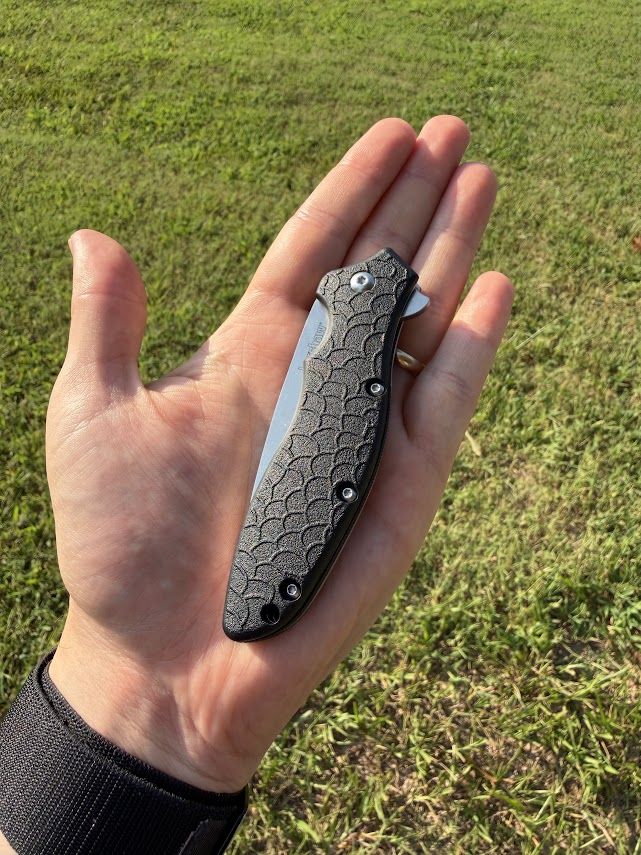
A $30 Ken Onion assisted flipper with a hollow-ground 8Cr13MoV drop point — the knife you leave in a truck and forget about.
The Böker Plus Urban Trapper occupies a niche distinct from every other knife in this roundup: the 'gentleman's folder,' designed around minimal visual presence and slim, dressy carry rather than maximum cutting capability or hard
The Buck 110 Folding Hunter has been in continuous production since 1963 with only minor refinements, and it remains the reference point for traditional American lockback design. The brass bolsters, wood handle, and clip-point bla
The Kizer Begleiter, designed by custom knifemaker Ray Laconico, brings a longer 3.5-inch blade and D2 steel to a price point similar to the Civivi Elementum, but in a larger, more substantial package. Its spear-point-influenced b
The CRKT Drifter packs a frame lock and a flipper-style opener into a knife that costs less than a third of what those two features typically command. 8Cr13MoV, the steel used here, is a budget Chinese stainless alloy that does no
The Zero Tolerance 0350 is built by Kershaw's premium, USA-made tactical division, and it shows in the thickness of the blade stock and the substantial G10 handle. CPM-S30V steel and a robust liner lock give it real hard-use capab
The Opinel No. 8 has been manufactured in Châtellerault, France using essentially the same design since the company's founding in 1890. The standard carbon steel version takes the sharpest edge of any knife in this roundup — carbo
The SOG Flash AT uses SOG's proprietary Assisted Technology to deploy its 3.45-inch clip point blade with minimal thumb pressure, competing directly with the Kershaw Leek and Blur in the budget assisted-opening category. D2 steel
The Case Stockman is a three-blade slipjoint pattern that has remained essentially unchanged in American pocket knife history for well over a century. Without a true lock, it relies on spring tension built into the frame to keep e
The CRKT M16-14ZP, designed by tactical knife maker Kit Carson, adds a secondary safety mechanism called AutoLAWKS on top of a standard liner lock, mechanically blocking the lock bar from being pushed aside accidentally. This extr
The Gerber Paraframe strips the EDC folder down to its simplest form: a skeletonized stainless steel frame serves as both the handle and the frame lock, with no separate scales or liners. This minimalist construction keeps the pri
How to Choose a Pocket Knife
A pocket knife purchase comes down to four variables: blade steel, lock mechanism, weight, and price. Getting the combination right for a specific use case matters more than chasing the single "best" knife on paper.
Blade steel determines maintenance frequency
Budget steels like 8Cr13MoV sharpen quickly but lose their edge faster under repeated use. Premium steels like CPM-S30V, S35VN, and S45VN hold an edge through weeks of EDC tasks but take more effort to resharpen when the time comes. Carbon steel (Opinel) splits the difference: it takes the sharpest possible edge and sharpens easily, but requires active rust prevention.
Lock type affects both safety and legality
AXIS locks, Compression Locks, and Tri-Ad locks rank among the strongest and safest locking mechanisms in production folders. Liner locks are reliable for normal use but generally rank below frame locks and AXIS-style locks in stress testing. Traditional slipjoints have no true lock at all, relying on spring tension — appropriate for whittling and light tasks, not for prying or hard use.
Weight changes how often the knife actually gets carried
A knife that sits in a drawer because it's uncomfortable to carry provides zero value. The lightest options in this roundup (Opinel No. 8 at 1.6oz, Benchmade Bugout at 1.85oz) are easy to forget you're carrying. Heavier options (Cold Steel Recon 1 at 5oz, Buck 110 at 7.2oz) trade pocket comfort for more material and, generally, more durability under hard use.
Check local law before buying based on blade length or opening mechanism
Blade length limits, assisted-opening restrictions, and locking-blade rules vary significantly by state, county, and city, and they change over time. Before purchasing a knife with a blade over 3 inches or an assisted-opening mechanism, verify current local law.