At a Glance: All 10 Options Compared
| Rank | Product | Score | Price | Weight | Why It Made the List | |
|---|---|---|---|---|---|---|
| 1 | Best Sunglasses Overall | 9.5/10 | $160 | ~26g | No arms, no hinges, no screws — an adjustable cord replaces the entire temple assembly | Read Review |
| 2 | Best All-Around Sport Sunglasses | 9.4/10 | $183 | ~29g | A taller Prizm lens and swappable options that make one frame work for nearly every sport | Read Review |
| 3 | Best Lightweight Budget Pick | 9.3/10 | $60 | 26g | A 26-gram frame with a hair-friendly hinge and Glide anti-bounce texture, for a fraction of premium pricing | Read Review |
| 4 | Best for Mountaineering & High Altitude | 9.3/10 | $190 | 44g | Glacier glasses with photochromic lenses that adjust automatically from 6% to 86% light transmission | Read Review |
| 5 | Best for All-Day Sun Protection | 9.2/10 | $237 | ~30g | An 8-base wraparound frame with ChromaPop lenses, built for guides who are outside all day, every day | Read Review |
| 6 | Best for Water & High Glare | 9.1/10 | $309 | ~34g | 580G glass lenses that selectively filter the exact light wavelengths that wash out color on the water | Read Review |
| 7 | Best Rimless Sport Sunglasses | 9.0/10 | $239 | ~24g | A rimless, 8-base sport frame with PolarizedPlus2 lenses built to survive Hawaii's harshest glare | Read Review |
| 8 | Best Budget Running Sunglasses | 8.9/10 | $25 | ~24g | No-slip, no-bounce polarized sunglasses that punch well above their $25 price | Read Review |
| 9 | Best for Fishing & Sight-Casting | 8.8/10 | $149 | ~32g | N3 polarized lenses that block 4x more infrared light than standard polarized lenses | Read Review |
| 10 | Best Budget All-Rounder | 8.7/10 | $60 | ~28g | A Smith-owned brand's do-everything polarized wrap, backed by a lifetime warranty | Read Review |
Full Reviews
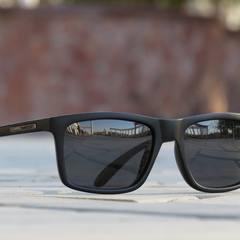
No hinges, no screws — an adjustable cord replaces the arms entirely, distributing weight evenly and making these functionally impossible to lose the way traditional sunglasses get lost or broken in the field.
A taller-lens update to Oakley's classic Radar, with Prizm tints tuned per-activity and Unobtainium grip that gets stickier as you sweat — genuinely upgraded optics, not just a tint change.
A 26-gram Grilamid frame with a hair-friendly hinge and genuine polarization, priced at a fraction of premium sport-sunglass brands — Tifosi's clearest value argument on this list.
Julbo's flagship glacier glasses, with photochromic lenses that swing from 6% to 86% light transmission automatically — built for the light extremes of high-altitude mountaineering.
Named for the fishing and hunting guides it was built for, this 8-base wraparound frame with ChromaPop lenses delivers all-day sun protection with a real, visible boost to contrast.
Costa's 580G glass lenses selectively filter the exact wavelengths that wash out color on water — the clearest option on this list for anglers, paddlers, and anyone hiking in serious glare.
A rimless, 24-gram sport frame with Maui Jim's color-enhancing PolarizedPlus2 lenses — genuine 8-base coverage without the weight of a full frame.
A snug, no-bounce running frame with genuine polarization and UV400 protection for $25 — the clear value pick if fit and price matter more than premium lens tech.
Built around the fishing technique it's named for, the Sightcaster's N3 lenses block 4x more infrared light than standard polarized glass — genuinely deeper visibility into water, and a strong pick for hiking along it too.
A Smith-Optics-owned budget wrap with genuine polarization, an 8-base frame, and a lifetime warranty — Smith engineering DNA at a fraction of Smith's own prices.
How to Choose Sunglasses
Lens technology matters more than the brand name on the box
Oakley's Prizm, Smith's ChromaPop, and Costa's 580 lenses each use proprietary tuning to boost contrast and color rather than just darkening the view — independent and owner reviews consistently report a real, visible difference over generic tinted or polarized lenses, which is where the price premium of top brands is actually earned.
Match lens darkness and coverage to your environment
Standard trail hiking below tree line needs less coverage and a mid-range tint. Open ridgelines, snowfields, and water crossings benefit from 8-base wraparound frames and darker, polarized lenses. High-altitude mountaineering and glacier travel call for dedicated glacier glasses with side shields and very high UV protection.
Fit and retention prevent the most common real-world failure
Sunglasses that slip, bounce, or fall off during a scramble or stream crossing are a bigger practical problem than marginal lens differences. Options like Ombraz's armless cord design or goodr's no-slip, no-bounce fit specifically solve for retention rather than just optics.
Budget options have closed much of the performance gap
Suncloud (Smith-owned) and Tifosi both deliver genuine polarization and solid build quality at a fraction of premium pricing, closing much of the gap that used to separate budget and premium sport sunglasses — the remaining difference is mostly in lens-tuning sophistication, not basic function.
Guides for This Category
- Prescription Sunglasses for Hiking — Four ways to see clearly in the sun
- Sunglass Lens Categories and VLT Explained — Category 0 to 4 and what visible light transmission actually means for the conditions you hike in
- Contrast-Enhancing Lens Technologies Explained — Prizm, ChromaPop, 580, and the rest
- Sunglasses vs Goggles for Winter Hiking — Ventilation against sealing, and why experienced winter hikers carry both
- How to Stop Sunglasses Fogging and Slipping — Two problems with the same root cause
- Why Armless Sunglasses Work So Well — Removing the hinge removes the failure point, the pressure point, and the reason sunglasses fall off your face
- Are Ombraz Worth It? An Honest Look — $160 for sunglasses with no arms
- Ombraz vs Traditional Sport Sunglasses — Cord retention and no hinges against wraparound coverage and premium optics
- How to Size and Adjust Sunglasses — Frame width, base curve, and nose pads
- Best Sunglasses for Wearing with Hats and Helmets — Temple arms and hat bands compete for the same space
- Sunglass Retainers and Straps Explained — Floating foam, adjustable cord, and built-in retention
- How Long Do Sunglasses Last? — Coatings, hinges, and UV protection all age differently
- Sunglasses for Kids and Teens — Children get more lifetime UV exposure than adults, and the fit and retention problems are worse
- Best Budget Sunglasses for Hiking — What $25 to $75 genuinely buys, what it does not, and why cheap sunglasses are sometimes the smarter choice
- Best Sunglasses for Trail Running — Bounce, sweat, and fogging are the three problems